Marketing and audience engagement
Sustainability in journalism depends as much on financial health as it does on strong reporting. As editor in chief of Arlingtonian, my foremost goal was that the publication could reliably go to print year after year. During my sophomore and junior years on staff, I witnessed issues being delayed or canceled due to limited funds and saw school years begin with little financial capacity to print at all. While a yearly grant from the UA Education Foundation now provides a buffer, it covers only about two issues.
To strengthen financial continuity, I focused on building leadership within our business team. With our business manager returning this year as a senior, I intentionally decided to recruit a second business associate to learn the how to manage our business needs and to make sure there was smooth transition in the years ahead. This addition supported my sustainability goals by developing future leadership in areas that have fallen apart in years prior. After seeing limited returns from off-campus fundraisers in prior years, I worked with the business team to reevaluate our approach and added an in-school fundraiser that was designed to engage with our student and staff readership. The result was raising over nine hundred dollars compared to the previous fundraiser’s two hundred.
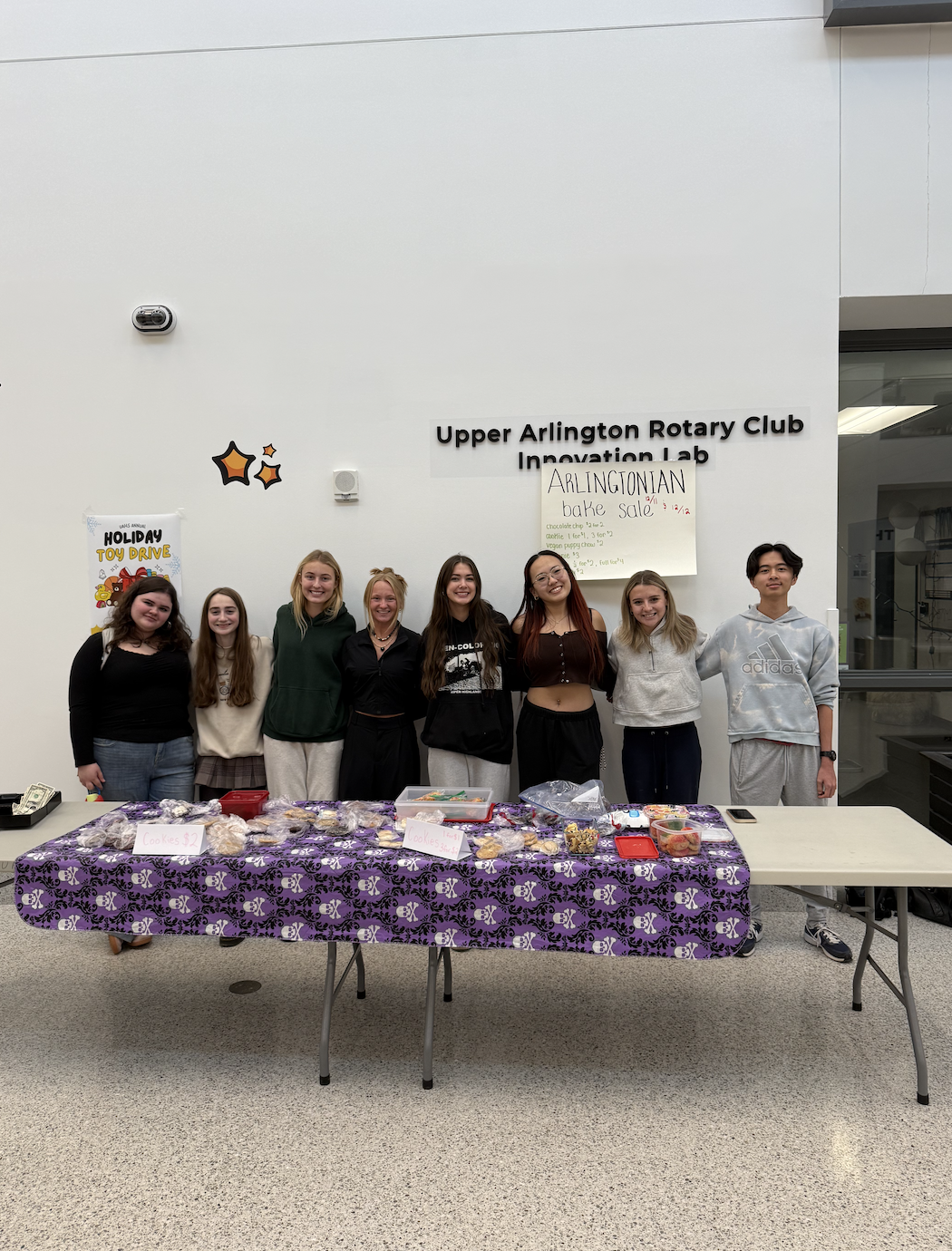
Photo taken from this years Arlingtonian bake sale.
I am heavily involved in the business side of Arlingtonian and I work side by side with our business managers on getting ads, setting up fundraisers and managing our cash flow. As editor in chief, my main role is to communicate with our printing company, Hopkins Printing. I am in charge of uploading each issue to Hopkins, and I am frequently in touch with our sales representative, George Hajjar, who provides me with updates on the printing and shipping logistics of each issue.
During my time as managing editor in the 2024–2025 school year, I paid close attention to how students actually engaged with Arlingtonian on distribution days. I listened to conversations in the hallways and watched where pages were turned first. Without fail, readers flipped first to Missed Connections, a section built from anonymous student submissions. The insight was clear. To better meet readers where they were, I focused on making participation more accessible. At the start of the year, when our school district implemented House Bill 250, restricting cell phone use during the school day, our previous social media submission method became ineffective. In response, I created a QR code to be printed in each issue, allowing students to submit entries during the school day using our school issued devices. Submissions increased from an average of thirty per issue to nearly two hundred, a clear increase in student response.
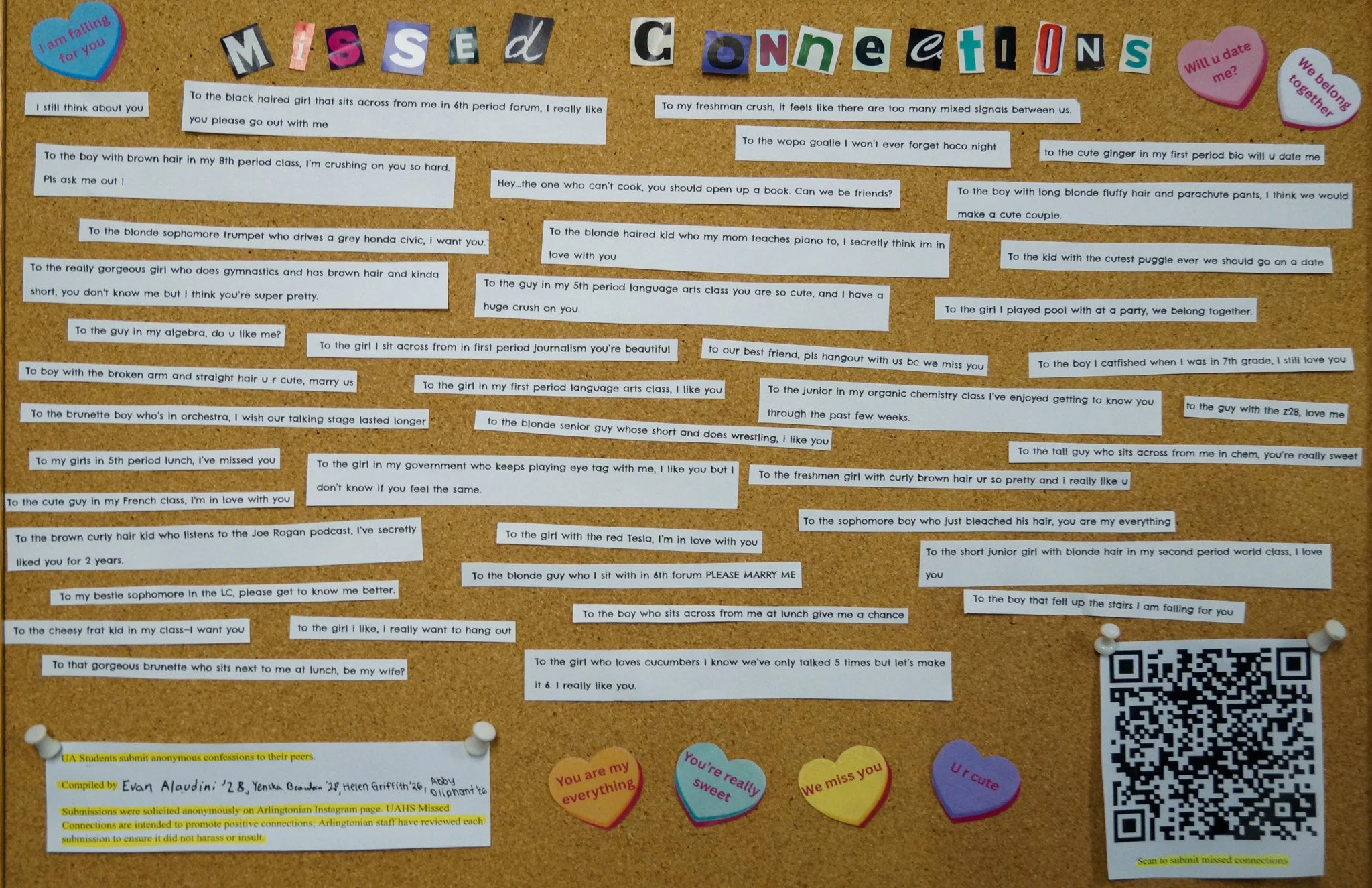
Missed Connections section from Issue 4 of Arlingtonian, print edition.
I saw the need to strengthen our readership, so I reimagined how Arlingtonian was distributed and introduced an approach that improved our reach into the community. This year, staff members sign up to deliver copies to local businesses, collect ten to twenty issues on print day, and document their outreach by sharing a photo on our staff GroupMe. On top of broadening our readership, this helped our staff connect with the community. Conversations with local business owners and community members showed genuine interest and appreciation for the publication.
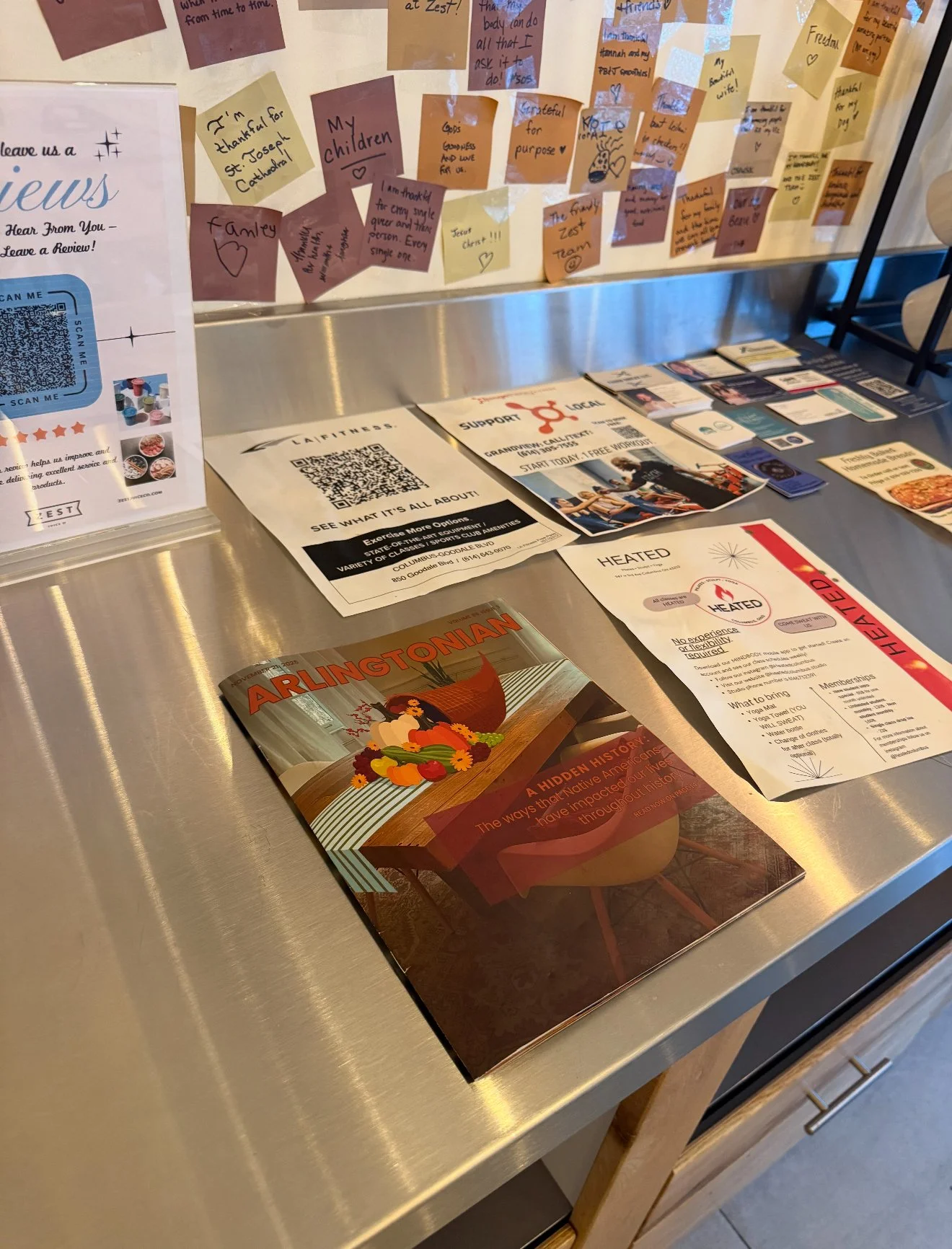
Arlingtonian issues displayed at Zest Juice, a local business who has an ad in each of our issues.
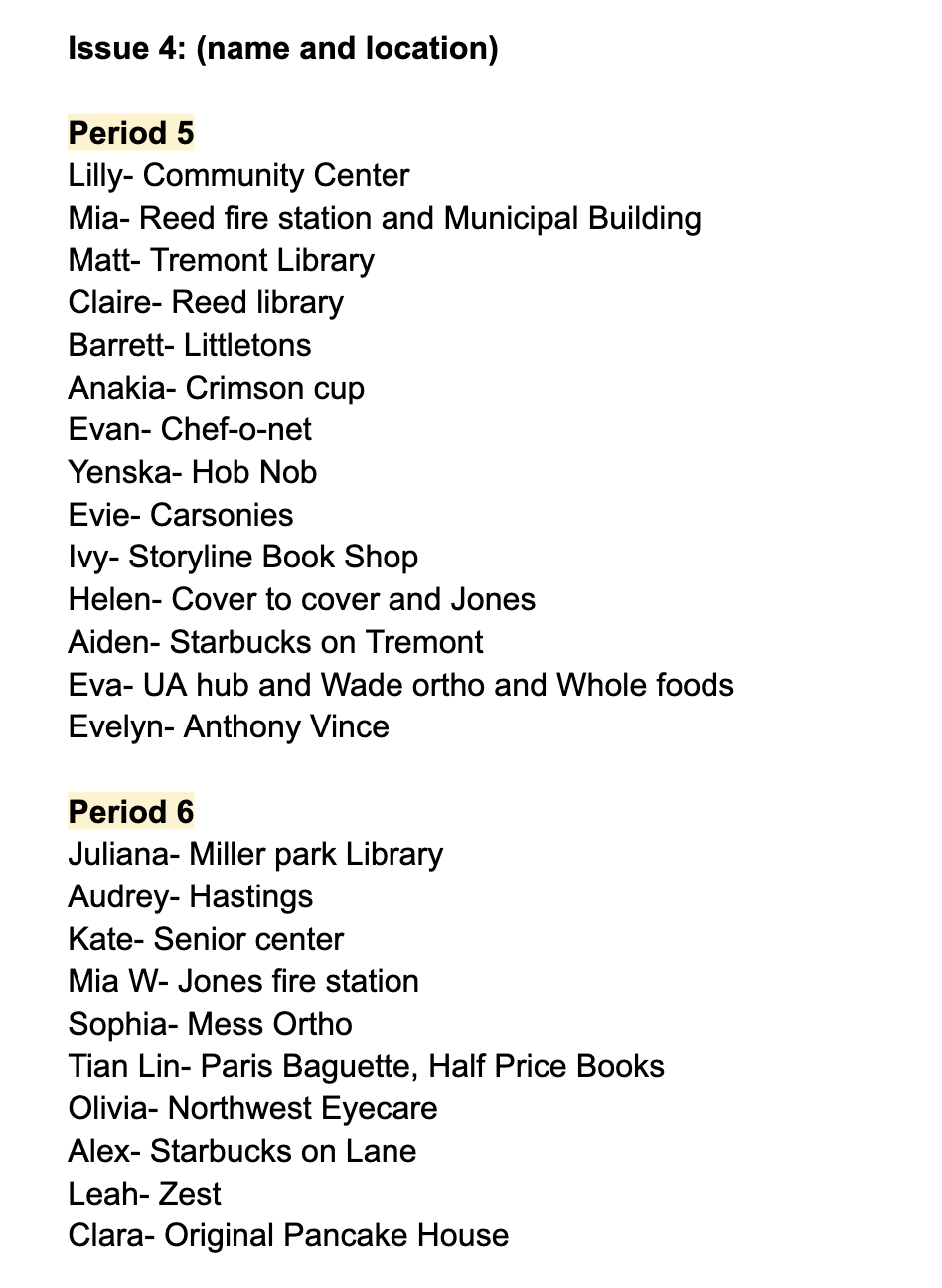
Example of the sign up sheet I created for distribution into our community.